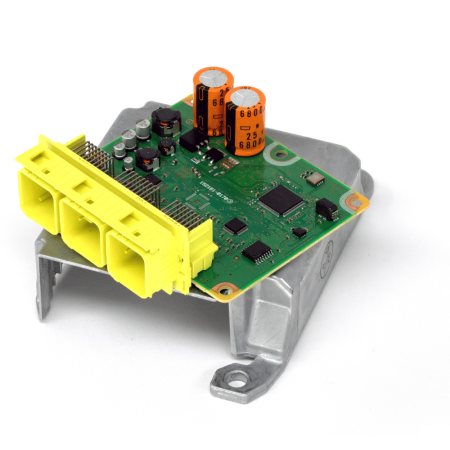
Airbag Crash Data Reset – Module repair, crash data removal, and SRS programming

The airbag crash data reset service involves removing stored accident data from the SRS module (Airbag ECU), allowing the unit to be safely reused after a collision. This process restores the functionality of the airbag system without the need for full module replacement.

What is Airbag Crash Data Reset and how does it work?

The airbag crash data reset service is an advanced SRS (Airbag) solution used in modern vehicles to restore safety system functionality after an accident. It works by removing stored crash data from the airbag control module (ECU), allowing the system to operate normally again without replacing the unit.

The process involves accessing the airbag module, reading its internal memory (EEPROM/FLASH), and clearing crash-related data using specialized equipment. Once reset, the module is reprogrammed and tested to ensure proper communication with sensors and components. This service restores full SRS functionality, removes persistent error codes, and ensures the airbag system meets safety standards and operates reliably.

How to reset crash data

  1. Removing the airbag module
  2. Read EEPROM / Flash memory
  3. Remove crash data from dump
  4. Correct software rewriting
  5. Bench testing
  6. Installation on the car and checking

We do not use universal methods or emulators, but real reset from the dump.

What is SRS Airbag System and why is it important?

The SRS (Supplemental Restraint System) airbag system is an essential vehicle safety technology designed to protect passengers during sudden collisions. It works alongside seatbelts to reduce the impact of crashes by deploying airbags at the right moment based on sensor data.

This system includes airbags, impact sensors, seatbelt pretensioners, and an electronic control module that constantly monitors vehicle conditions. When a collision is detected, the system responds instantly by activating safety components to minimize injury risk. The SRS system plays a critical role in modern vehicle safety by improving protection and reducing the severity of accident-related injuries.

Testimonials

What our customers says

"VA Auto saved the day! My car had a serious electronic issue, and they fixed it quickly. Professional, efficient, and very reliable. Everything runs perfectly now. Highly recommend their services!"

Charles Walker Customer

"Excellent service from VA Auto! They handled my ECU tuning and key programming with precision. Fast, professional, and very knowledgeable team."

Anita D. Costin Customer

"Great experience with VA Auto! They quickly diagnosed and fixed my DPF issue. Friendly staff, reliable service, and fair pricing. My vehicle is running smooth again. Will definitely return!"

Adam Calhoun Customer

Frequently asked questions

Here you will find answers to the most common questions about our services.

What is an SRS airbag system and how does it work?

The SRS (Supplemental Restraint System) is a vehicle safety system designed to protect passengers during a collision. It works using impact sensors that detect a crash and instantly trigger airbags and seatbelt pretensioners through the control module to reduce injury.

After airbags deploy, the system stores crash data in the airbag module and may lock for safety reasons. In most cases, the module cannot function normally again until it is reset or reprogrammed.

The SRS warning light can appear due to faulty sensors, deployed airbags, wiring issues, or stored crash data in the airbag ECU. A proper diagnostic scan is required to identify the exact cause.

Yes, in many cases the airbag module can be reused if it is not physically damaged. It needs to be repaired, cleared of crash data, and reprogrammed using professional tools.

Crash data is removed by accessing the internal memory of the airbag ECU using specialized equipment. The stored accident information is erased and the module is reprogrammed to restore normal operation.

Driving with an SRS warning light is not recommended because it indicates a fault in the airbag system. In this condition, airbags may not deploy correctly during an accident and should be inspected immediately.